
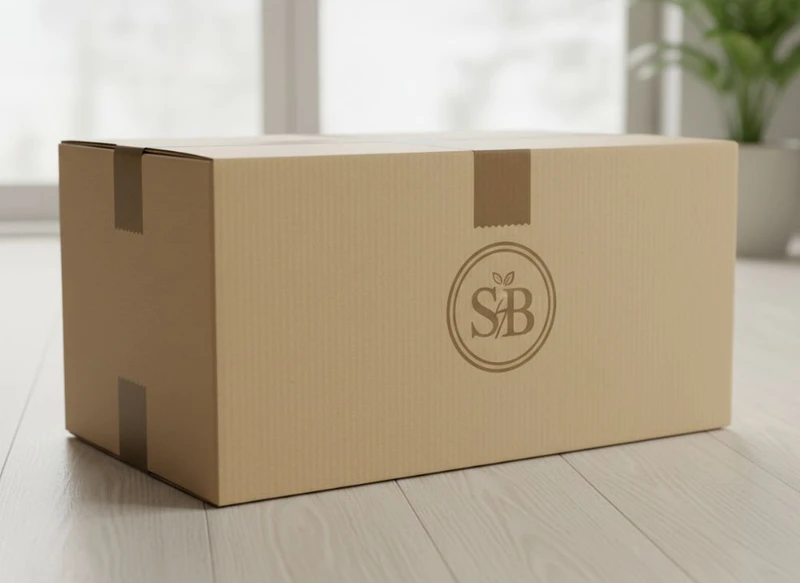
A successful subscription box uses packaging as a connected system: a durable outer shipping box, a visually considered inner box, clear branded seals, useful printed inserts and a design that stays recognisable without becoming repetitive. The right formula protects the contents while making each monthly delivery feel intentional.
For South African brands, the practical priorities are usually product fit, weight, transit resilience, storage space, repeatable packing and a presentation level that matches the subscription’s value. Start with the product and fulfilment process, then build the visual details around those constraints. This reduces waste, avoids over-packaging and makes reordering easier as the programme grows.
The Role of the Outer Shipping Box
The outer shipping box is the protective layer between your product and the handling environment. It should be selected for the product’s size, fragility, stacking needs and likely handling conditions—not simply for its printed appearance.
Corrugated board is a common choice for subscription deliveries because it provides structure without adding excessive weight. The required board construction depends on the contents. A box for lightweight apparel needs different protection from one containing glass jars, cosmetics, food items or several loose products.
When specifying an outer box, establish these points first:
- Internal dimensions: Measure the packed product arrangement, including any tissue, dividers, inserts and protective material. Do not size the carton only around the product itself.
- Empty space: A small amount of space may be needed for cushioning, but a box that is too large allows products to move and can increase shipping charges.
- Closure design: A reliable tuck, self-locking construction or tape closure should suit your packing workflow and the product weight.
- Print coverage: Plain outer boxes can be efficient where the branded reveal happens inside. Printed outer cartons can reinforce recognition but may be unnecessary for every subscription model.
- Storage and assembly: Confirm whether boxes arrive flat, how much storage they require and how quickly the team can erect and pack them.
- Handling protection: Consider corner strength, compression from stacking, moisture exposure and whether the contents need internal separation.
A common mistake is to invest heavily in a beautiful presentation box, then place it in an outer shipper that offers too little protection. Conversely, using an oversized heavy-duty carton for a light, non-fragile product can undermine the cost and sustainability goals of the programme.
For many brands, a practical solution is a neutral or lightly branded mailing carton paired with a more distinctive custom box inside. This separates transport protection from the unboxing experience and allows each layer to do its job well.
Designing the Inner Paper Box for Visuals
The inner paper box is where a subscription can create a strong first impression. It is the first branded object a customer sees after opening the shipping carton, so it should communicate the subscription’s personality quickly and clearly.
Choose a structure that suits both your product and the reveal. A lift-off lid can feel gift-like, while a tuck-end box may be more compact and straightforward for high-volume packing. Mailer-style presentation boxes create an immediate opening moment, but the design must still hold products securely.
Build the visual hierarchy
A clean hierarchy is generally more effective than placing branding on every available panel. Consider:
- The exterior: Use a logo, recurring colour, pattern or short brand line to make the box recognisable.
- The opening panel: Add a welcome message, prompt or practical instruction where it will be read naturally.
- The product layout: Make the contents look organised when the box is opened. Tissue, inserts or dividers can support this, provided they do not complicate packing excessively.
- The information layer: Keep detailed instructions, ingredients, product information or promotional messaging on cards rather than crowding the main box design.
Colour should be checked on the actual chosen board or paper stock before committing to a full run. Printed colour can appear differently across uncoated and coated surfaces, and very dark designs may show scuffs more readily during handling. Fine lines, small reversed text and delicate artwork also need careful pre-production review.
Match the box to the subscription category
The best inner box depends on what the customer expects to receive.
| Subscription type | Packaging priority | Suitable design approach |
|---|---|---|
| Beauty and self-care | Presentation and product separation | Branded paper box with tissue, compartments or protective inserts |
| Food and speciality goods | Product support and clear information | Compact box with secure product arrangement and readable labels |
| Apparel and accessories | Neat folding and gift appeal | Shallow presentation box, tissue wrap and size-appropriate fit |
| Hobby and craft kits | Organisation and instructions | Structured box with sections, inventory card and step-by-step insert |
| Premium gifts | Occasion value and reuse potential | Rigid-style presentation format, restrained graphics and considered closure |
Avoid assuming that premium always means heavier or more elaborate. A well-fitted, thoughtfully printed lightweight carton may be more useful than a large box with multiple decorative components. The most appropriate specification is the one that works consistently from packing bench to customer doorstep.
Custom Stickers for Sealing and Branding
Custom stickers are a flexible way to close tissue, seal boxes, identify variants and reinforce branding without changing the main carton artwork. They are especially useful for subscriptions that rotate flavours, themes, shades or monthly contents.
Use stickers purposefully rather than treating them as a decorative afterthought. A seal label can show that a box has been packed and closed, but it must adhere reliably to the selected surface. The adhesive that works on smooth coated carton may not perform the same way on textured, recycled or dusty surfaces.
Before ordering, confirm:
- the label size and placement area;
- the surface it will be applied to;
- whether the label needs to bridge a seam or simply sit on one panel;
- any exposure to cold, humidity or friction in packing and delivery;
- whether variable information, such as batch details or product variants, will be added separately;
- how easily the sticker should open for the customer.
A round seal on tissue creates a softer gift presentation. A rectangular tamper-evident label may be more suitable where a visible closure is needed. Small logo stickers can also be included as a reusable extra, although they should not replace essential product or safety information.
Explore custom printed stickers when you need a format that can be updated between campaigns or used across several packaging components. Request samples or test application on your actual packaging materials before confirming a final specification.
Incorporating Vouchers and Info Cards
Printed cards turn a delivery into a more informative and actionable experience. They can explain the month’s theme, introduce products, offer a future incentive or guide customers towards the next step in their relationship with your brand.
The most useful insert has one clear job. Trying to combine a welcome letter, product guide, discount, referral offer and detailed terms on one small card often makes it difficult to read.
Choose the right card for the purpose
- Welcome card: Sets the tone for first-time subscribers and explains what to expect.
- Product information card: Lists contents, use instructions, care guidance or relevant details that customers may need after unboxing.
- Theme card: Connects the products to the month’s curation or story.
- Voucher card: Encourages an additional purchase, gift subscription or follow-up action.
- Referral card: Gives subscribers a simple way to share the service with someone else.
- Feedback card: Invites reviews or product preferences, using a short and clear prompt.
Keep voucher conditions understandable. Confirm the code, expiry date, eligible products, minimum spend if applicable and redemption channel before printing. If terms may change often, a smaller evergreen card with a QR code or unique code field can be more manageable than a large preprinted promotional run.
For regulated products or products with required information, verify the current South African labelling and consumer-information requirements relevant to your category. A beautiful insert does not replace any information that must legally appear on the product or its label.
Weight and Shipping Cost Optimisation
Weight and parcel dimensions affect delivery costs, handling and the customer’s perception of excess packaging. Optimisation is not about making packaging as thin as possible; it is about using the least material that still protects the product and presents it appropriately.
Start by recording the packed dimensions and total weight of a finished box, not just the individual items. Include the outer shipper, inner carton, filler, tissue, stickers, cards and any protective elements. Then compare alternative packing configurations before fixing the final box size.
Practical ways to reduce unnecessary weight
- Use a box footprint that fits the contents closely.
- Replace bulky void fill with product-specific dividers or folded paper where appropriate.
- Avoid duplicate layers that provide no clear protective or presentation function.
- Combine messages onto one well-designed insert instead of adding several loose cards.
- Select paper and board stock based on the protection needed, rather than choosing the heaviest option by default.
- Design products to nest or stack safely if you control the product format.
- Review seasonal editions separately if their contents differ significantly from the standard box.
The lightest pack is not always the most cost-effective choice. If a thinner material causes damage, product movement or difficult packing, the apparent saving can disappear. Test prototype packs under normal handling conditions relevant to your operation, and inspect not only the box but also the arrangement and condition of the contents.
Also check compatibility with your delivery provider’s measurement method and commercial terms. Charges can depend on both physical weight and parcel dimensions, so final shipping costs should be confirmed using the complete packaged parcel.
Enhancing Value with Branded Inserts
Branded inserts add value when they improve the experience, provide useful guidance or make the subscription easier to enjoy. They become clutter when they are unrelated, repetitive or immediately discarded.
Useful insert options include:
- printed tissue carrying a subtle pattern or logo;
- product dividers that keep items orderly;
- a reusable recipe, care or activity card;
- a thank-you note with a personal but scalable message;
- a product checklist that helps customers identify every item;
- a small branded sleeve or belly band around a curated group of products;
- a gift message card for subscriptions bought for another person.
Each additional item adds material cost, packing time and potential complexity. Review inserts through the packer’s perspective as well as the customer’s. If an item must be folded in a certain direction, placed under a particular product and sealed in a sequence, it needs clear packing instructions.
An insert should also suit the purpose of the subscription. For example, a coffee subscription may benefit from brewing guidance, while a stationery box may gain more from a project prompt or illustrated inventory card. Relevance creates perceived value more effectively than volume.
Keeping the Design Fresh for Repeat Customers
Repeat customers need familiarity and variety in balance. A subscription should feel recognisably yours every month, but opening the exact same visual arrangement can reduce the sense of discovery over time.
Keep the permanent elements consistent:
- core logo treatment;
- brand typefaces and primary colour family;
- box structure and opening experience;
- tone of voice;
- placement of essential information.
Then vary selected elements according to a controlled monthly theme:
- colour accents;
- tissue or sticker artwork;
- illustration panels;
- card designs;
- interior messages;
- seasonal or product-led sleeve designs.
A modular approach is often more practical than redesigning the main box for every cycle. Maintain one core outer and inner packaging format, then refresh lower-commitment items such as stickers, cards, tissue and sleeves. This can help you respond to changing product selections without leaving obsolete cartons in storage.
Create a simple artwork system before launching. It should define the fixed brand elements, the components that may change, the approval process, version names and file requirements. This is particularly important when multiple teams handle product curation, marketing and fulfilment.
Do not refresh the design so frequently that subscribers cannot recognise the brand, and do not use limited-edition language unless you can manage the stock and communication around it accurately. Consistency builds trust; variation sustains interest.
Gift Packaging Aesthetics for Monthly Delivery
Subscription packaging often functions as recurring gift packaging, whether the recipient bought it personally or received it from someone else. The design should therefore feel considered without becoming difficult to open, impractical to recycle or too fragile for delivery.
Gift packaging aesthetics begin with proportion and restraint. A box that fits its contents neatly, opens cleanly and uses a coherent set of colours can feel more premium than one covered with excessive finishes and messages.
Elements that create a gift-ready feel
- A tidy, centred product arrangement.
- Tissue paper or a paper wrap that creates a deliberate first reveal.
- A consistent colour palette across box, sticker and card.
- A short interior message that feels appropriate for any recipient.
- A clear product card that helps the recipient understand what they have received.
- An optional gift note area for gift subscriptions.
- Materials that align with the practical expectations of your audience.
Special finishes such as foil, embossing, textured paper or ribbon can create impact, but they should be selected with the total pack journey in mind. They may affect cost, lead times, recyclability considerations, storage, scuff resistance and packing speed. Ask for guidance on compatible materials and test the complete combination rather than approving each component in isolation.
For a subscription sold as a gift, consider the first-delivery experience separately from subsequent months. The first box may need onboarding information and a more complete introduction, while repeat deliveries can focus on the new theme and contents. A dedicated gift packaging solution can help structure this distinction without making every monthly pack unnecessarily elaborate.
A Practical Custom Packaging Checklist
Before placing an order, review the following with your packaging supplier and internal team:
- Define the full product assortment and likely variations.
- Measure and weigh the complete finished parcel.
- Choose an outer box for protection and an inner format for presentation.
- Confirm board, paper, closure and print choices against the intended use.
- Map every component in packing order, from product placement to final seal.
- Check sticker adhesion on the actual packaging surface.
- Review all card copy, voucher terms and product information for accuracy.
- Test the pack with realistic handling, stacking and opening.
- Confirm quantities, artwork versions, storage needs and reorder planning.
- Verify any category-specific packaging, labelling or environmental requirements that apply to your products in South Africa.
The essential custom packaging formula for subscription box success is not a single box style. It is a repeatable packaging system that protects the product, suits your fulfilment process, keeps delivery dimensions under control and gives subscribers a reason to look forward to opening the next delivery.
When you are ready to specify the components, compare your required box structure, printed inserts and label applications against the available XGolden Print packaging options, then request samples or proofs appropriate to your final materials and artwork.
