
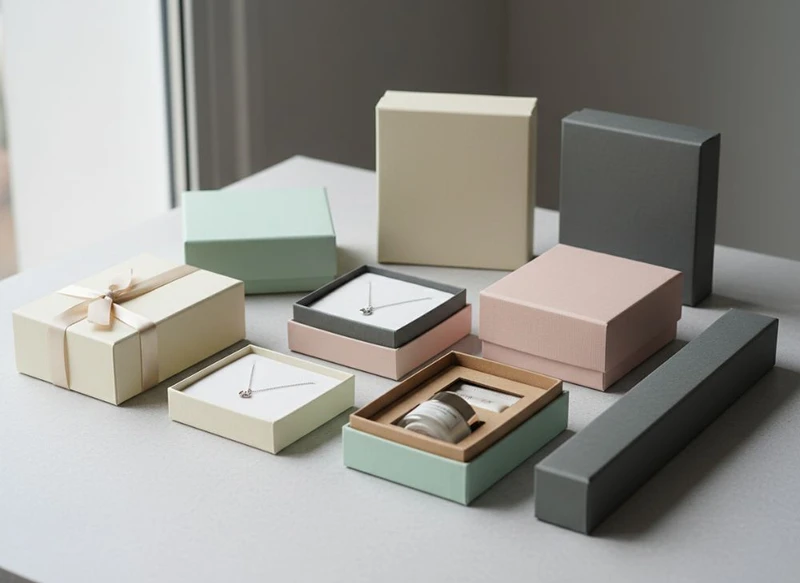
Choosing the right custom paper box for every product type starts with three questions: what must the box protect, how will it be packed and handled, and what should the customer experience when opening it? A box that suits a lightweight cosmetic jar will not necessarily protect a cable-packed electronic item or create the right presentation for a premium gift.
For South African brands, the practical choice also needs to consider storage conditions, transport handling, humidity, product weight, shelf display and the amount of space available for printed information. Start with the product itself, then select the box style, board grade, dimensions and closure around its real-world needs.
Packaging for Small Items (Jewellery, Cosmetics)
Small products need packaging that prevents movement without making the item appear insignificant. Jewellery, skincare, make-up, samples, accessories and small personal-care items often benefit from compact paperboard boxes with a close-fitting internal layout.
The key is to match the inside dimensions to the product rather than relying on the outside size alone. Too much empty space can allow a product to shift, while an overly tight box can be difficult to pack and may damage delicate finishes.
Consider these factors when specifying small product boxes:
- Product fit: Measure the item at its widest points, including caps, pumps, labels and any protective wrapping.
- Internal support: Inserts, dividers, folded platforms or paper cushioning can hold jewellery, bottles or cosmetic components in place.
- Opening experience: Tuck-end cartons are practical for everyday retail products, while lift-off lids, drawer boxes and rigid-style formats can create a more premium feel.
- Print area: Small boxes have limited space. Prioritise essential product information, instructions, warnings and brand elements.
- Surface protection: If products have metallic finishes, glass components or soft-touch labels, prevent direct rubbing between the item and the inside of the box.
For jewellery, a compact box with a fitted insert can help present the piece neatly and reduce tangling. For cosmetics, the box must accommodate the full product shape, including any unusual pump, tube or applicator. If the product is sold in a set, a divider or custom insert may be more suitable than placing several items loose in one carton.
A common mistake is choosing a box based only on visual appeal. Small-format packaging should first secure the item, then support the desired brand presentation.
Medium Product Boxes (Electronics, Apparel)
Medium-sized boxes are often used for apparel, consumer electronics, footwear, homeware, stationery and multi-item retail packs. These products usually need more structural support than cosmetics or jewellery, but the packaging should still be efficient enough for storage and fulfilment.
For electronics, assess the product’s weight, shape, cable placement and sensitivity to impact. A standard folding carton may work for a light accessory, but a heavier device may need stronger board, a corrugated outer box, or an internal insert that keeps it centred. Packaging should also leave room for manuals, charging components, accessories and any product-specific information.
For apparel, the decision is more about fold size, garment protection and presentation. A shallow mailer-style box can suit folded shirts or accessories, while a deeper carton may be better for knitwear, bundled outfits or boxed footwear. Avoid excessive dimensions: oversized apparel boxes take up more storage space and may require extra void fill.
When planning medium product boxes, confirm:
- Packed weight – Include the product, accessories, insert, leaflets and protective materials.
- Dimensions after packing – Use the folded or assembled product size, not only the item’s unpacked measurements.
- Stacking needs – Consider whether boxes will be stacked in storage or on retail shelves.
- Unboxing sequence – Decide whether customers should see the product immediately or remove a protective layer first.
- Tamper visibility – Some products may require a seal, label or closure that makes opening evident.
- Retail display requirements – Check whether the box needs a hanging tab, shelf-facing panel, barcode area or product window.
A well-designed electronics box often combines an outer printed carton with an insert that stops internal movement. Apparel boxes can use tissue paper, folding supports or simple dividers where needed, but should remain easy for staff to pack consistently.
Large Box Solutions (Subscription and Kitting Boxes)
Large paper boxes are useful for subscription packs, promotional kits, corporate gifting, product bundles and e-commerce orders containing several items. Their main challenge is not simply size; it is managing varied contents without creating excess movement, damage or a cluttered opening experience.
Subscription and kitting boxes should be planned around a repeatable packing process. If the contents change regularly, use a box with enough flexibility to accommodate different combinations while maintaining a consistent external footprint. If the product assortment is fixed, a tailored insert or divider system may improve presentation and packing speed.
Useful options include:
- Mailer-style boxes: Often suitable for branded delivery packs, kits and multi-product orders.
- Self-locking boxes: Designed to assemble without separate tape in some applications, depending on the box construction.
- Two-piece boxes: Useful where a lift-off lid supports a more formal presentation.
- Corrugated shipping cartons: Better suited to larger, heavier or more demanding transport applications.
- Partitions and dividers: Helpful for separating bottles, jars, samples or fragile items.
- Paper-based void fill: Can reduce movement where a custom insert is not practical.
Avoid using one large box for every order merely to simplify purchasing. A box that is much larger than the packed contents can increase the need for filler, reduce stacking efficiency and create a less polished customer experience. A small range of standard box sizes is usually more practical than a single universal format.
For kitting, map the packing order before approving the design. The team packing the box should be able to identify where each item belongs and close the box without forcing the contents into place.
Corrugated vs. Cardboard: A Durability Comparison
“Cardboard” is a broad term that can describe different paper-based packaging materials. When comparing options, it is more useful to distinguish between folding paperboard cartons and corrugated board.
Folding cartons are generally made from paperboard and are commonly used for retail packaging, cosmetics, food-related packaging where suitable materials are specified, lightweight products and gift boxes. Corrugated board has a fluted layer between liner sheets, giving it greater structural depth and cushioning potential.
| Feature | Folding paperboard carton | Corrugated box |
|---|---|---|
| Typical appearance | Smooth, print-friendly retail finish | More structural, often used for shipping or mailers |
| Best suited to | Lightweight to moderate products | Heavier, bulkier or transport-sensitive products |
| Print presentation | Suitable for detailed graphics and finishes | Can be printed, though surface and print requirements should be discussed |
| Internal protection | May need an insert or separate cushioning | Provides some cushioning through its fluted structure |
| Storage profile | Often supplied flat and compact | Also commonly supplied flat, but takes up more space once assembled |
| Common formats | Tuck-end cartons, sleeves, folding boxes | Mailers, shipping cartons, self-locking boxes |
Neither material is automatically better. The correct option depends on the product weight, shape, packing method and journey from warehouse to customer.
A light skincare tube may only need a folding carton. A kit containing glass bottles may need a corrugated mailer plus separators. A premium item may use a printed paperboard presentation box placed inside a separate protective shipping carton.
Do not choose board strength based on appearance alone. Ask the packaging supplier to confirm the proposed material, construction and suitability for the product’s packed weight and intended handling conditions.
Seal and Closure Options for Security
Closures affect both security and usability. The right option should keep the box closed through normal handling while allowing the intended recipient to open it without unnecessary frustration.
Common closure choices include:
- Tuck flaps: A familiar choice for folding cartons. They are practical for many retail products but may not provide visible tamper evidence on their own.
- Locking tabs: Can provide additional closure strength in suitable box styles.
- Glue-sealed cartons: Often used for cartons packed and closed during production or fulfilment.
- Adhesive strips: Can suit mailer boxes and may simplify closing during order packing.
- Tamper-evident labels or seals: Useful where it is important to show whether the package has been opened.
- Sleeves: A paper sleeve can hold a lid-and-base box closed while adding branding space.
- Ribbon, magnets or specialty closures: More appropriate for selected luxury and gift applications, subject to the product design and budget.
Security is not the same as tamper evidence. A strong closure can keep a box shut, while a tamper-evident seal indicates whether opening may have occurred. Determine which requirement applies before choosing the format.
Also consider the packing environment. A closure that works well for a few hand-packed gift boxes may be inefficient for high-volume fulfilment. Request a physical sample or prototype where possible to check assembly, filling and closing steps.
Temperature and Climate Considerations for Paper Boxes
Paper packaging responds to its environment. Heat, moisture and changes in humidity can affect flatness, stiffness, adhesive performance and print appearance. This matters in South Africa, where products may be stored in warm conditions, moved between dry and humid areas, or exposed to moisture during handling.
Paper boxes should be stored in a clean, dry area away from direct moisture and prolonged heat. Boxes that absorb moisture may soften, warp or lose some structural rigidity. Extremely dry conditions can also affect how paperboard folds and behaves during packing.
To reduce avoidable issues:
- Keep unassembled boxes in their protective wrapping until needed.
- Store cartons off the floor and away from damp walls or leaks.
- Avoid placing packed boxes near heat sources or in direct sunlight for extended periods.
- Allow packaging and products to adjust to the packing environment before assembly if they have been stored under very different conditions.
- Select an outer protective box where the product faces a more demanding delivery journey.
- Confirm that inks, coatings, adhesives and materials are appropriate for the product and expected storage conditions.
For products affected by heat or moisture, the paper box is only one part of the solution. The product formulation, primary container, seals, liners and shipping packaging must work together. A paper carton should not be assumed to provide a moisture barrier unless the specific construction has been designed and confirmed for that purpose.
Where food, cosmetics, pharmaceuticals or other regulated products are involved, verify the applicable packaging, labelling and material requirements for the intended South African market. Requirements can vary by product category and packaging use.
The Best Gift Packaging for Luxury Products
Luxury packaging should make the product feel considered, but it must still be functional. The best gift packaging balances tactile quality, clean construction, secure product placement and a clear opening sequence.
For premium products, consider a box format that gives the item room to be presented rather than simply contained. Rigid-style boxes, lid-and-base boxes, drawer boxes, magnetic-close formats and premium folding cartons can all be appropriate depending on the product and the desired level of reusability.
The design choices that most influence perceived quality are often simple:
- A box proportion that fits the product neatly
- A lid or closure that opens smoothly
- An insert that holds the item in place
- Consistent colour reproduction and carefully placed branding
- A finish selected for the intended look, such as matte, gloss, textured paper or foil detailing
- A restrained amount of messaging rather than printing every panel heavily
Luxury does not require a large box. In fact, oversized packaging can feel wasteful and may make a small product appear less valuable. Match the package volume to the item, then use material, print, structure and interior details to create distinction.
Before approving a luxury box, check how it performs in the full journey. Decorative finishes can be affected by scuffing, and a presentation box may still need a separate outer shipper for transport. Test the complete packed configuration, including inserts, wrap, labels and outer protection.
Streamlining Your Supply Chain with Consistent Boxes
A consistent box programme can simplify purchasing, stock control, product launches and fulfilment. This does not mean every product should use the same carton. It means defining a manageable family of sizes, materials and design rules that works across your range.
Start by grouping products according to practical packaging needs:
- Small, lightweight items
- Medium retail products
- Garments and soft goods
- Fragile products needing internal separation
- Bundles and kits
- Premium gifting products
- Outer shipping cartons
For each group, create a basic specification that records the internal dimensions, box style, board type, closure, insert requirement, print areas and packing instructions. This helps prevent confusion when products are reordered, updated or handed to a different packing team.
Standardising selected dimensions can also make it easier to plan shelving, outer cartons and void-fill materials. However, avoid forcing an unsuitable product into a standard box purely for convenience. A small range of well-chosen formats is generally more useful than either an excessive number of unique sizes or one poorly fitting universal box.
When reviewing a new packaging supplier or product format, use a structured checklist:
- Does the box fit the product and all included components?
- Is the material appropriate for the packed weight and handling conditions?
- Does the closure match the required level of security or tamper evidence?
- Can the box be assembled and packed consistently?
- Is there enough space for required product information and branding?
- Does the final pack work for retail display, gifting, shipping or all three?
- Have the relevant compliance and material requirements been verified for the product category?
A detailed brief improves the chances of receiving packaging that is fit for purpose. Include product dimensions, weight, photographs, packing sequence, desired box style, finish preferences and the conditions the box is expected to withstand.
For a starting point, explore custom packaging box options and compare formats against your product’s protection, presentation and packing needs. The most effective custom paper box is the one that fits the product properly, performs through its intended journey and supports a consistent brand experience.
