
A packaging quote can look complete while still excluding costs that only appear once artwork, production timing, shipping terms or repeat orders are discussed. The best way to compare suppliers is to ask for an itemised, landed-cost quote that separates one-off charges, per-unit charges, freight and any costs that may arise later.
These are the 7 hidden costs in custom packaging quotes you must clarify before approving custom boxes, labels, sleeves or gift packaging. Not every order will include every charge, but each item can affect your real budget and unit cost.
Before placing an order, ask the supplier to mark every quote line as one of the following:
- Included in the unit price
- A one-off setup cost
- Estimated and subject to change
- Optional, pending your approval
- Not included
This makes it far easier to compare proposals that use different materials, quantities, delivery terms or production assumptions.
Plate and Die Setup Charges
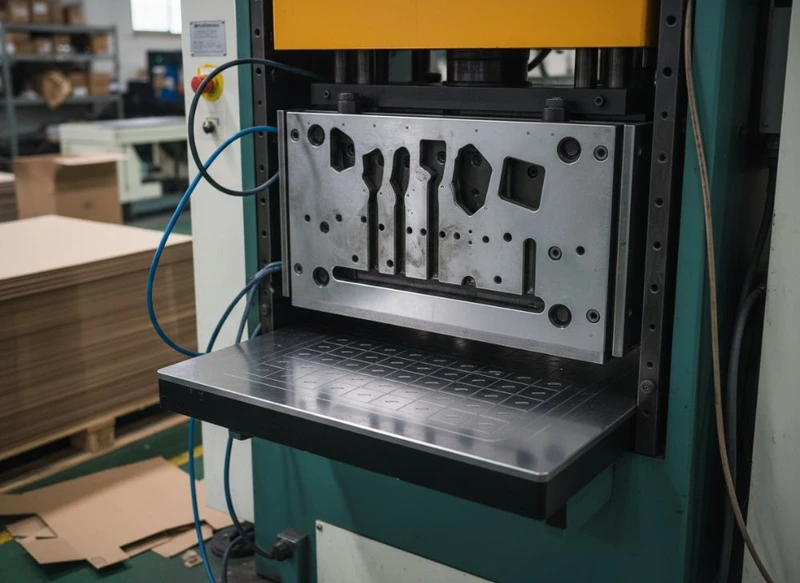
Printing plates and cutting dies are commonly needed for custom packaging. A plate transfers artwork during certain printing processes, while a die cuts, creases or shapes the packaging into its final form. These costs can be significant because they are usually charged separately from the boxes themselves.
A quote may include an attractive per-box figure but omit setup charges for:
- Printing plates for each ink colour
- A cutting and creasing die for the box shape
- Embossing or debossing dies
- Foil stamping dies
- Special varnish or coating plates
- Separate dies for inserts, sleeves or dividers
The exact requirement depends on the print method, packaging structure and finish. Digital printing, for example, may reduce or avoid some plate costs, but it may not suit every material, colour requirement or order volume. Confirm the process rather than assuming that “full colour” means no setup is required.
Questions to ask about setup charges
Ask the supplier:
- Which plates and dies are required for this design?
- Is each setup charge included, quoted separately or still to be confirmed?
- Is the charge once-off, or does it apply to each repeat order?
- Who owns the physical plates and dies after payment?
- How long will they be retained, and under what conditions?
- Will design or size changes require completely new tooling?
A box with a standard structure may need less tooling than a fully bespoke shape. If cost control matters, consider whether a standard-size custom box with branded printing can meet the brief before specifying unusual folds, windows or complex internal fittings.
Proofing and Sampling Fees
A digital artwork proof is not the same as a physical packaging sample. The quote should make that difference clear.
A digital proof lets you inspect text, layout, barcode placement and general design before production. A physical sample lets you assess the box structure, fit, substrate, colour appearance and finishes in a real format. Depending on the project, either or both may carry a charge.
Potential proofing and sampling costs include:
- Pre-production artwork checks
- Digital proofs and revised proofs
- Printed colour proofs
- Blank structural samples
- Fully printed prototype samples
- Courier or transport charges for physical samples
- Sample tooling where a production die is not yet available
- Extra samples for multiple stakeholders or product variants
For packaging that must fit a specific product, a structural sample is usually more useful than relying on a flat digital artwork file. It can reveal whether the product shifts, whether tabs close correctly and whether the package is practical to assemble.
Avoid approving an unclear proof stage
Clarify what the proof is designed to validate. A digital PDF can help catch spelling errors, but it may not accurately represent final colour, board texture, foil coverage or the effect of a matte coating.
Before approval, confirm:
- Whether the proof is digital or physical
- Whether the proof uses the final substrate and finishing method
- How many proof revisions are included
- Whether colour matching is included or subject to tolerance
- What approval means contractually
- Whether changes after approval will trigger further charges or delays
Check product names, ingredients, legal wording, recycling information, batch fields and barcodes carefully. If labels are part of the specification, the same attention applies to custom printed stickers, where a small artwork error can affect a large production run.
Expedited Shipping Costs
Expedited shipping charges arise when the packaging must be moved faster than the standard production and transport plan allows. They can apply to inbound material, finished packaging, samples or replacement quantities.
The important point is that “rush” can affect more than freight. It may require a revised production schedule, premium transport arrangements, split shipments or alternative material availability. A supplier may be able to quote an expedited option, but it should never be assumed to be included in a standard lead-time estimate.
Ask for separate figures for:
- Standard production timing
- Expedited production, if available
- Standard dispatch or collection arrangements
- Faster transport options
- The cost of shipping part of the order early
- Any extra handling or packing required for an urgent dispatch
When speeding up can cost more than expected
A partial shipment can reduce the immediate risk of running out of packaging, but it may increase the total cost. You could pay additional handling and freight more than once, while the remaining quantity still needs to be transported later.
A better alternative is often to plan a reorder point based on actual usage, allowing time for artwork approval, production, quality checks, freight and receiving. Build in a contingency for seasonal demand, campaign packaging and new-product launches rather than assuming every order can be accelerated.
Minimum Order Quantity (MOQ) Traps
Minimum order quantity, or MOQ, is not only a production number. It directly changes your cash flow, inventory exposure and true per-unit packaging cost.
A supplier may offer a lower unit price at a higher volume. That can be valuable when demand is stable, but it can become expensive when packaging contains dates, product-specific details, a campaign message or a design likely to change.
Common MOQ traps include:
- The MOQ applies separately to each size, colourway or design variation
- An MOQ is quoted per artwork version, not across a product range
- A box, sleeve and insert each have different minimums
- The minimum excludes test samples or pre-production units
- A premium finish increases the MOQ
- Reorders must meet the same minimum even when tooling already exists
- Tolerances mean the delivered quantity may vary from the ordered figure
Do not compare unit prices without comparing the total commitment. A low unit cost on a large MOQ can be less economical than a higher unit cost on a manageable quantity if stock becomes obsolete or occupies valuable storage space.
| Quote question | Why it matters | What to confirm |
|---|---|---|
| What is the MOQ? | Sets the smallest production commitment | Whether it is per design, size, finish or total order |
| Is there a price break? | Helps compare volumes fairly | Unit price and total price at each quantity |
| What is the overrun or underrun policy? | Actual delivered quantities can differ | Permitted tolerance and how it is billed |
| Can designs be combined? | May reduce exposure across a range | Which components can share a production run |
| Does MOQ change for reorders? | Affects future purchasing | Repeat-order conditions and pricing basis |
For seasonal product launches or premium presentation packs, gift packaging should be specified with expected shelf life in mind. Avoid ordering more branded stock than you can reasonably use before a redesign, promotion change or product update.
Storage and Inventory Fees
Finished packaging still has a cost after production. If you cannot receive the full order immediately, suppliers may offer storage, staged releases or inventory management. Those arrangements can be useful, but their fees and responsibilities should be documented.
Possible storage-related charges include:
- Warehouse storage charged by time, pallet, carton or space used
- Handling fees for each release
- Picking and dispatch charges
- Palletisation or repacking charges
- Stock-counting or administration fees
- Insurance-related terms, where applicable
- Charges for aged stock that remains uncollected
- Disposal costs for obsolete, damaged or abandoned packaging
The main risk is treating storage as free simply because it was not shown on the initial quote. Ask how long goods can be held before charges begin and whether the supplier can release stock in smaller batches.
Match order size to storage reality
Large orders can lower the unit price, but they need dry, secure and suitable storage conditions. Packaging can be affected by moisture, crushing, dust, sunlight and poor stock rotation. Cartons also consume more space than the flat dimensions of a box suggest once they are packed, palletised and handled.
Before committing to a high-volume order, calculate:
- How many weeks or months of stock it represents
- Where it will be stored
- How stock will be counted and rotated
- Whether product packaging may change during that period
- The cost of handling multiple releases
- Who is responsible if cartons are damaged after collection or while in storage
If a supplier will hold inventory, request a written release schedule, stock-reporting method and clear ownership terms.
Artwork Revision Charges
Artwork revisions are one of the most preventable hidden packaging costs. They often occur because the scope of artwork support is not defined before the project starts.
A packaging supplier may quote for production-ready artwork only. In that case, the buyer is responsible for supplying correctly sized files, dieline placement, bleed, fonts, linked images, colour references and print-ready exports. If the supplier needs to repair files, adapt designs to a dieline or create new layouts, additional charges may apply.
Revision costs can arise from:
- Changing copy, ingredients or product claims
- Correcting a barcode or QR code
- Replacing logos, images or language versions
- Altering box dimensions after artwork has been laid out
- Adding a new finish, window or insert
- Reworking files that do not meet technical requirements
- Making changes after a proof has been approved
- Creating separate artwork for each product variant
Set a controlled revision process
Assign one person or team to consolidate feedback before sending it to the supplier. Multiple reviewers sending separate amendments often create duplicated work and version-control problems.
A useful artwork brief should include:
- Final product name and variant
- Box dimensions and orientation
- All required copy and compulsory statements for your market
- Brand assets and approved logos
- Barcode specifications and placement requirements
- Required colours and finishes
- Existing dielines, if available
- The intended quantity and packaging components
- A named final approver
Confirm how many artwork amendments are included, what counts as a minor versus major revision, and whether structural changes require new artwork setup or tooling. For regulated product categories, verify the current labelling and packaging requirements independently before granting final approval.
Tooling Maintenance Costs
Tooling is not always a once-off expense. Cutting dies, printing plates and other production tools may require inspection, replacement, repair or remaking over time. The cost may be included, charged separately or only raised when a repeat order is placed.
Tooling maintenance is particularly important for packaging with detailed cut-outs, fine embossing, complex folds or high repeat volumes. Wear can affect cut accuracy and crease quality, so the supplier may need to replace a tool to achieve the agreed specification.
Clarify these terms at the start:
- Whether tooling maintenance is included in repeat-order pricing
- Whether a tool has a stated retention period
- What happens if the tool is damaged, misplaced or no longer suitable
- Whether you will be told before replacement costs are incurred
- Whether minor repairs need approval
- Whether artwork changes can be made to existing tooling
- Who owns the tooling and whether it can be transferred
Do not assume a paid die can be reused indefinitely. Ask the supplier to identify the conditions that would trigger new tooling, particularly if you expect regular reorders over several years.
Understanding Freight and Duties
Freight is often the largest quote variable after the packaging itself, especially when packaging is imported or delivered over a long distance. It must be evaluated as part of the landed cost, not as a final add-on.
A complete freight discussion should distinguish between:
- Transport from the factory or collection point
- Export packing, if relevant
- International freight, if relevant
- Local delivery or collection
- Cargo insurance, where offered or required
- Customs clearance and documentation
- Import duties, taxes and other border-related charges where applicable
- Port, terminal, inspection, demurrage or storage charges if delays occur
- Delivery to your site versus delivery only to a terminal or depot
Confirm the delivery term, not just the freight amount
A freight line without a delivery term is incomplete. The buyer should know exactly where the supplier’s responsibility ends and where the buyer’s responsibility begins.
Ask these practical questions:
- Is freight included, estimated or excluded?
- Is the quote for collection, delivery to your premises or delivery to another point?
- Who arranges customs clearance for imported packaging?
- Which party is responsible for duties, taxes and related charges?
- What documents will be provided for customs and receiving?
- Can freight change due to fuel, capacity, route or handling conditions?
- Are dimensions and weights final, or based on estimates?
- What costs apply if delivery cannot be accepted on the planned date?
For imported packaging, duty treatment can vary according to the product classification, origin, material and current requirements. Confirm the likely charges with an appropriately qualified customs or freight professional before comparing offshore and local supply options. Never assume that an ex-factory price reflects the final cost of packaging in South Africa.
A practical checklist before accepting a packaging quote
Use this checklist to turn a broad quote into a decision-ready one:
- Request an itemised quotation with one-off and recurring costs separated.
- Confirm the exact packaging material, dimensions, print method and finishes.
- Check whether plates, dies and samples are included.
- State the number of artwork revisions included before additional charges apply.
- Compare total cost at realistic order quantities, not unit price alone.
- Confirm MOQ by design, size, variant and component.
- Establish the delivered quantity tolerance and billing method.
- Agree on proof approval responsibilities and sign-off steps.
- Confirm freight terms, delivery point and all import-related responsibilities.
- Ask about storage, staged delivery and uncollected-stock charges.
- Record tooling ownership, retention and replacement terms.
- Keep the approved quotation, dieline, artwork version and proof together for future reorders.
Frequently asked questions
Is the cheapest packaging quote usually the best choice?
Not necessarily. A lower unit price may exclude setup, freight, proofing, storage or tooling charges. Compare the total landed cost for the same specification, quantity and delivery terms before deciding.
Should tooling be included in the unit price?
Either approach can work. Separating tooling makes the once-off investment visible, while including it in the unit price can simplify budgeting. What matters is knowing whether the cost will recur and how it changes on a repeat order.
Can I avoid packaging setup costs altogether?
Sometimes, but not always. Standard structures, fewer special finishes, digital printing and simpler artwork may reduce setup requirements. The suitable approach depends on the design, material, quantity and quality expectations.
What should I provide to get a more accurate quote?
Provide final dimensions, product weight or fit requirements, required quantity, artwork status, materials, finish preferences, delivery location, target date and whether you need samples. If any detail is undecided, ask for it to be identified as an assumption in the quote.
A well-structured quote protects both your budget and your production plan. When requesting packaging from XGolden Print or another supplier, share a clear specification and ask for every potential cost to be shown before approval. You can also review the supplier’s background on the XGolden Print about page when assessing whether it is a suitable fit for your packaging project.
